RESUME Patient Engagement Study Selected for Presentation at ESGE Days 2026 in Milan
Late-Breaking Abstract on Patient Preferences Informing the RESUME Trial Accepted by ESGE Scientific Committee
 WIRE
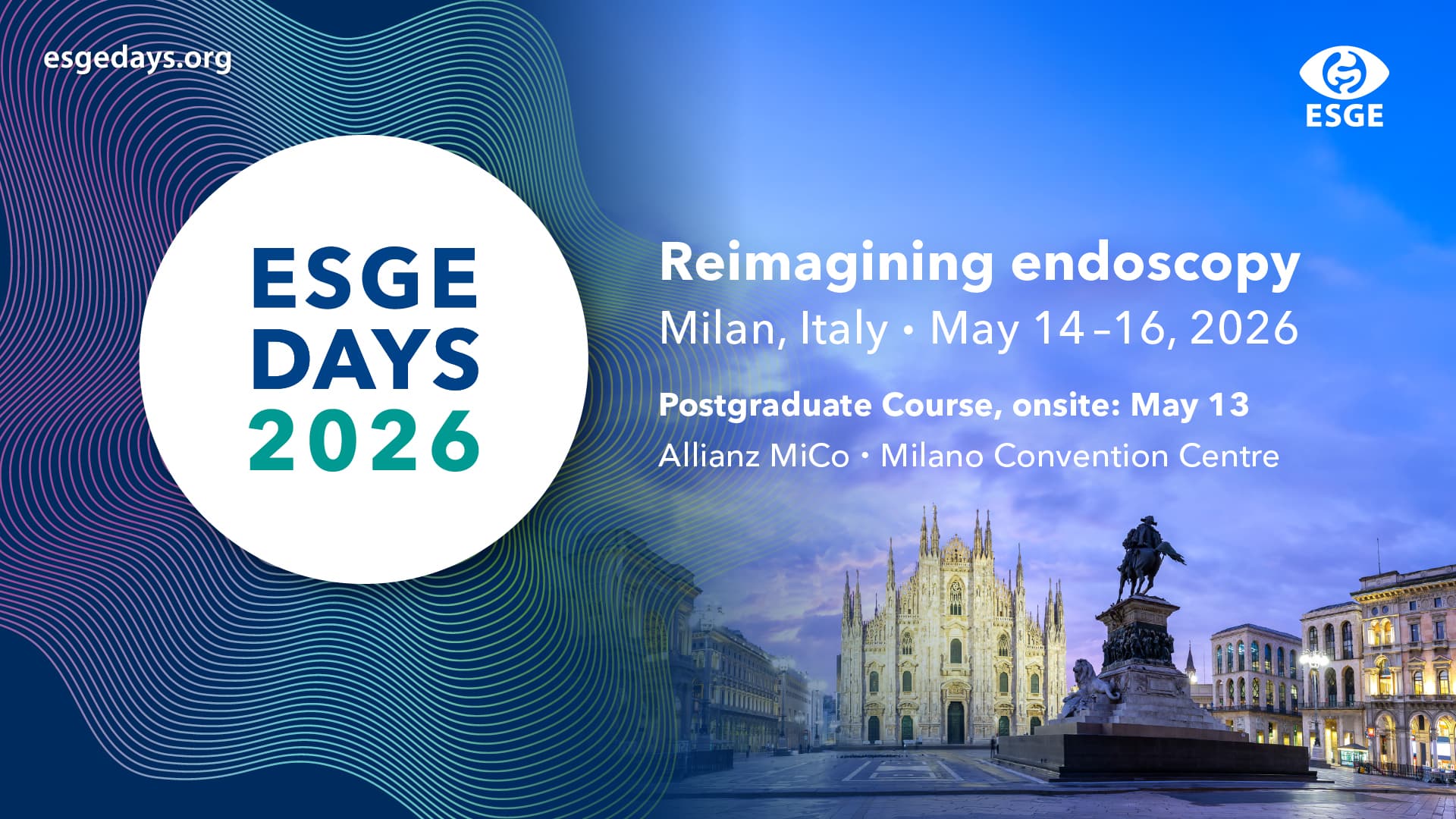
WIREA late-breaking abstract from WIRE has been selected by the ESGE Scientific Committee for presentation at ESGE Days 2026, held May 13–16 at the Allianz MiCo — Milano Convention Centre in Milan, Italy. The study, titled "Patient Preferences Regarding Bleeding Versus Thromboembolic Risk After DOAC Interruption for High-Risk Endoscopic Procedures: An International Survey Informing the Design of the RESUME Trial," was led by WIRE Founding Director Dr. Zachary Smith, who serves as Chief Investigator of the RESUME trial.
The late-breaking abstract category at ESGE Days is reserved for novel research not yet complete at the time of the standard submission deadline, and only high-quality original studies with significant impact in the field of endoscopy are considered. The acceptance rate for late-breaking abstracts is low given the limited space in the program and the rigor of the review process, making this selection a meaningful recognition of the work's quality and relevance.
This study represents a critical piece of groundwork informing the design of RESUME, a proposed large multicenter randomized controlled trial comparing earlier versus delayed resumption of direct oral anticoagulants (DOACs) after high-risk gastrointestinal endoscopy. The results clearly demonstrate that among a broad and diverse population of patients with atrial fibrillation taking DOACs, there is genuine balance in what patients fear most when their anticoagulation is interrupted for a procedure — stroke or bleeding. Some patients view the risk of a thromboembolic event as the more frightening outcome, while others are more concerned about serious bleeding. This uncertainty, often termed "equipoise," provides the ethical and scientific foundation to justify a randomized trial to answer this clinical dilemma. Without evidence that patients collectively favor one risk over the other, the question of optimal DOAC resumption timing can only be resolved through a well-designed comparative effectiveness study — which is precisely what RESUME is built to do.
The work exemplifies two of WIRE's core research pillars in action. It reflects the institute's commitment to stakeholder engagement — ensuring that the patients who will be enrolled in RESUME have a direct voice in shaping the trial's design, endpoints, and risk communication — and it advances the clinical trials pillar by generating the preliminary evidence needed to support the scientific premise and justify the conduct of a large, federally funded randomized trial.
Presentation at ESGE Days — one of Europe's premier endoscopy meetings — reflects the international scope of both the survey and the RESUME network, and underscores the growing visibility of WIRE's research program on the global stage.